
Led off by Mayor Tom Potter, the parade some people thought would never happen‚ but did‚ was one that everyone enjoyed. In addition to seeing fun photos, learn about the dedicated group of volunteers whose diligent work turned this dream into a reality‚

The first parade of the 2007 Portland Rose Festival is lead by the VFW Post 1442 Honor Guard and by the Grand Marshal, Portland’s Mayor Tom Potter.
Story and photos by David F. Ashton
As recently as a couple of years ago, no one would have guessed that the first sanctioned event of the Portland Rose Festival’s centennial year would be a parade along 82nd Avenue.
But, against all odds, dedicated volunteers from three neighborhood business districts and six neighborhood associations saw their big dream turn into reality on April 28.

2007 Portland Rose Festival Princesses gather for a group photo before perching on convertibles for their ride up the newly-renamed 82nd Avenue of Roses.
Right on schedule, the First Annual Portland Rose Festival Avenue of Roses Parade started north along 82nd Avenue of Roses‚ led off by Grand Marshall Mayor Tom Potter.
The “rat-ta-tat-tat” of the Madison High School Drum Corps kept the parade moving. Participants included Portland Rose Festival Princesses, Royal Rosarians, and representatives of business districts, neighborhood associations, schools and supporting firms.

SE Portland’s own PEParazzi Squad gets ready to cheerlead along the parade route.
Festivities continued after the parade, with a sidewalk festival hosted by the Montavilla East Tabor Business Assn. and Montavilla Neighborhood Assn. on SE Stark St.
Parade a symbol of change
“When I saw our parade listed on the Portland Rose Festival calendar of events, I said to myself, ‘This is big stuff’,” commented one of the key volunteers, Sandra McDaniel, past chair of Montavilla Neighborhood Association. “So many of us worked so hard, I’m grateful that we were able to create this event.”

Organizing the first parade in the history of 82nd Avenue of Roses, Ken Turner works with two of the parade’s 35 primary volunteers.
As a long-time resident of the area, McDaniel said she was skeptical much could be done to improve the working-class reputation of 82nd Avenue. “But when I heard Ken Turner share his vision at an organizing meeting, I knew he was on to something.”
She said that notion of changing the thoroughfare’s name to “Avenue of Roses” was the turning point that got people to think differently about this strip of outer East Portland.
“It’s catching on. People are excited about it.”

Keeping the parade participants stepping along to a brisk rhythm is Madison High School Drum Corps.
Along with the parade, pride
One volunteer told us of an elderly lady who watched the parade, camera in hand. “I’m taking pictures of this,” she said, “to put in our history, to make sure this is part of the history of Outer Southeast.”
Along the parade route, a neighbor commented, “It’s about time we had something good like this here. People will look at Outer Southeast Portland in a different way now.”

Riding in their very first parade are 2007 Portland Rose Festival Princesses (clockwise, starting from top/left) Chelsea Linn, David Douglas High School; Hong Le, Marshall High School; Audria Shaw, Madison High School and Tiffany Loanzon, Cleveland High School.
Two years in the making
We talked with Ken Turner, president of the 82nd Avenue of Roses Business Association‚ the man credited with sparking the area’s turn-around effort‚ about the parade.
“About two years ago,” Turner began, “our group of volunteers was looking for ideas, and perhaps events that would help band together neighborhoods and businesses along the avenue. Along with developing the Avenue of Roses concept‚ including beautification, reducing crime, and giving our area a good identity‚ we came up with the idea of a parade.”
Turner said the idea “got legs” a year ago, and the volunteers filed for the parade permit last fall.

Ruth Hander, chair of Madison South Neighborhood Association, catches a ride with Reid Trumel.
A true grassroots effort
The parade, we learned, was a community-driven and directed event. Turner said, “We, about 35 key volunteers, spent hundreds of hours to make this happen. We did it on our own‚ working against tremendous odds. Our volunteers stayed with it right through to the end‚ actually, right till the beginning of the parade.”
Turner would himself take little credit for the parade’s success. “People talk about how neighbors and businesspeople should work together. The Avenue of Roses parade is an example of volunteers actually doing it. We had folks from three business associations and six neighborhood associations working, side-by-side to realize this event. They all took ownership of producing an event that builds pride in our part of outer East Portland.”

Leading off the procession representing the three participating local business districts is (top) Alema McCrea, Montavilla East Tabor Business Association (passenger in the Buick); followed by (bottom left) Jean Baker, Division/Clinton Streets Business Association; and, (bottom right) Nancy Chapin, Foster Road Business Association.

Nattily dressed in their white suites, the Royal Rosarians greet outer East Portlanders watching the parade.
In addition to the core of organizing volunteers, others pitched in. They gathered volunteers, obtained parade entries, gained permits and helped promote the event by distributing more than 10,000 flyers to neighbors along the route.
On parade day, more than 100 volunteers helped register entries, coordinate staging of the participants and act as “street monitors” along the route. The disbanding of the parade in Montavilla “went flawlessly”, Turner said.

Asian Lion and Dragon Dancers, sponsored by Wong’s Chinese Seafood Grill, delight bystanders as they prance along the parade route.

East Portland Chamber of Commerce president Greg Zuffrea greets all, riding in a spiffy car supplied by Chamber member Gresham Ford, “The dealer with a Heart”.
Parade draws ‘fan mail’
“This is an example of what communities can accomplish when they work together on a common goal,” Turner commented.
For the past few days, Turner said he’s been gratified by the volume of complimentary calls, cards, and e-mails that have come in from spectators.
Johnni Jones, a Montavilla resident and one of the key volunteers, told us she sees real changes happening along the avenue.
“It was such an awesome feeling on Saturday to see the community out along the avenue,” expressed Jones. “And the best part is to see the increasing camaraderie among of business people and neighbors. This effort is making a difference here.”
As an example, Jones notes the new rosebushes planted along 82nd Avenue of Roses and E. Burnside St. “Our avenue is blooming, in more ways than one.”

Local fresh food purveyors — Lents International Farmer’s Market (opening at SE 92nd Ave. and Foster Rd.) and the brand-new Montavilla Farmers Market (opening at 7700 SE Stark St.) — are well represented at the parade.

Contributing sponsors, like Richard Kiley’s Home Run Graphics, help make the Avenue of Roses parade possible. Yes, Gail is driving …
Next year’s parade being planned
“We’ve already started planning for next year already. Our first meeting is coming up in a few days,” recounted Turner. “We’ll take what we’ve learned from this event. We’ll build on the best things, and improve other areas.”

The Burgerville Trolley snakes up the Avenue of Roses, as do fire trucks from Portland Fire & Rescue Station 2 – each entry greeted by cheers from the crowd.
Major Sponsors are Eastport Plaza Shopping Center and Washman, USA. Other sponsors include Banfield Pet Hospital, SEUL, 82nd Ave of Roses Business Assn. A supporting grant was received from the City of Portland Business District Grant Program through the Alliance of Portland Neighborhood Assns. (APNBA). Contributing sponsors include Portland Community College, Home Run Graphics, The Support Group, Grace Baptist Church, and Bank of the West.
© 2007 David F. Ashton ~ East Portland News Service
See who was awarded firefighter and police officer of the year at the 30th edition of this East Portland event, which honors all of Portland’s public safety personnel‚

At the VFW Post #1 Awards Friendship Dinner, Post M.C. Tom Murphy stands with their “Firefighter of the Year”, Portland Fire & Rescue’s John Hill. Captain Marco Benatti presented the award.
By David F. Ashton
Every year, members of outer East Portland’s VFW Post #1 takes time out to celebrate the good work done by local firefighters and police officers.
“This is the 30th year,” the post’s Adjutant, Richard Linstead explained, “that our post has held an awards banquet to honor our dedicated public servants.”
On April 21, at the Friendship Dinner, more than 100 people packed the organization’s banquet hall on SE 122nd Ave. The awards ceremony‚ filled with humorous comments about the recipients‚ began after the assembled group enjoyed a delicious dinner.
Awards Firefighter of the Year
Portland Fire & Rescue Firefighter Specialist John Hill, a Gresham resident, was presented the “Firefighter of the Year” of the year award. Hill serves at Station 24, the marine emergency response center for Portland Fire & Rescue. He’s developed a comprehensive navigation system to help Portland’s fireboats traverse our rivers, even during bad weather.
According to the bureau, Hill is role model — both in his organization and in the community. This firefighter has given more than 800 hours of community service time to support the Barlow football programs.

Last year’s “Police Officer of the Year“, Michael Gallagher, accompanies this year’s award winner, Portland Police Bureau East Precinct Officer Robert Slyter, to the podium. East Precinct’s Lt. Ron Anderson presented the award; he’s accompanied by M.C. Tom Murphy.
Police officer from East Precinct honored
It doesn’t surprise us that Portland Police Bureau East Precinct Officer Robert Slyter was nominated as the “Police Officer of the Year.”
An outer East Portland native, Slyter graduated from David Douglas High School. He’s served as on the Neighborhood Response Team and Crime Reduction Unit‚ and initiated a pilot project for patrolling a portion of NE Sandy Blvd.‚ on foot. (Click here to read our detailed story about the Parkrose Foot Patrol.)
The two award winners, Linstead said, were chosen by the men and women working in their respective bureaus. “We are in debt to the men and women who work around the clock, often putting their lives in danger, to help keep us safe,” he added.
Special thanks to Anita Finn for her photographs.
© 2007 David F. Ashton ~East Portland News Service
If you think you’re keeping your kids safe from child sexual predators by telling them to “stay away from strangers”‚ you’re WRONG! Don’t let your kids become victims. Read this article now‚

The information that Crime Prevention Program Specialist Teri Poppino shares about child molestation is, to many, startling
Story and photos by David F. Ashton
Several months ago, we sat in at a special meeting at which Crime Prevention Program Specialist Teri Poppino talked to group of neighbors in northeast Portland about child sexual predators.
“For years, it has been ‘common knowledge’ that typical child molesters are creepy, smelly strangers, who entice kids into their clutches, entreating them with nickel candy,” Poppino began. “But the fact is: A child molester looks like me; or you, or you,” she says as she points to herself and others in the room.
The room fell eerily silent. One mother’s face turned ghostly pale. A father looked stunned as he sat motionless, his mouth agape.
“The truth is that child molesters‚ child sexual predators‚ know the child, perhaps better than do their parents,” the former police officer continued. “Molesters know what clothing, foods, TV shows, video games, and school classes the child enjoys and dislikes‚ more than their mother or father do.”
During her presentations about defending your kids against child sexual predators, Poppino talked frankly. Occasionally, she said, parents will leave‚ they find the information she presents too disturbing to contemplate.
Again, at the East Precinct Commander’s Forum on May 1, Poppino is sharing her message with East Portland neighbors.

Most kids grow out of the “playing doctor” phase of adolescence, Teri Poppino says‚ but sexual predators never do.
Shattering molester misconceptions
It isn’t a life event that turns a “normal” person into a child molester. “Most little kids have ‘played doctor’ when they were young. But soon, the novelty wears off and the typical child loses interest. But, most molesters never grow out of it, and keep playing the ‘game’ with friends, then with other, younger people as they get older,” she tells the group.
Simply teaching kids that all “strangers” are bad, and people whom they know are “good”, is dangerously unsafe, Poppino instructs. “The fact is, a molester can be young or old, male or female, or of any race or religious belief. They are likely to be stable, employed, and respected in the community. They may be looked up to as a community leader. Moreover, they are ‘trusted’ and thus, have easy access to the ‘objects of their affliction’, your children.”
Scary facts better than misinformation
Poppino doesn’t tell groups this kind of information just to scare them, she says‚ but instead, to help them understand that child molesters play a “confidence game”, and learn to play it well. “Molesters don’t want to get caught. They learn to be very good at not getting caught; and they’re helped by ‘stay-away-from-strangers’-types of misinformation.”

Poppino explains why molesting parents are difficult to catch.
Molesting parents are especially difficult to catch and prosecute, she goes on. They look “normal” to other people. They “accidentally” expose themselves to their children while changing clothes or using the bathroom. They may touch their children sexually while tucking them in bed at night.
Then, they tell their children, that “this is what all loving fathers do with their children”, so they don’t tell others. Parental molesters may be so good at manipulating children that the kids never tell, because they love the parent.
Prevention tips
“The very best prevention we have is open communication with our kids,” says Poppino, herself a mother. “Instead of warning them to ‘stay away from strangers’ or scaring them with sex talks when they are too young to understand‚ simply let them know,over and over again, to come confide in you if anyone talks to them, or touches them, in any way that feels odd, yucky, or strange.”
It is easy to “trick” a child into keeping a secret, She adds. “Our children need to know that anytime someone touches them, and then swears them to secrecy; this is not right. Even if the situation seemed fun, this is a secret they must not keep. Get to know any older kids or families who want to spend more time with your children.”
Poppino urges parents to think about people they know who may take a “special interest” in their children. “They may be good, pure souls; and they may not.”
The key isn’t making kids feel uncomfortable around nice people, but making them aware of specific behaviors. “The key is to teach them to watch for inappropriate behaviors and actions.” Constantly remind your kids, she continues, that “secret touching” is never the child’s fault; and they aren’t “bad” if they get tricked into it.

Poppino says to pay attention to individuals who pay a “special interest” in your child and trust your intuition about people in your life.
Many adult molesters target single moms, she explains. “Why? Once they earn the trust of the mother, they have access to their kids. I tell all single moms to never share their personal history, especially if it includes molestation or victimization, with any people they date.”
Finally, Poppino urged parents to “Trust your intuition. If you feel something is not right in your child’s relationship, act on it immediately.”
Up to you
“As you walk away from this training, you will hopefully have an increased sense of awareness. This isn’t information to scare you, but to strengthen you,” Poppino concludes. “If you are like me, you may become hyper-vigilant. This is OK; I assure you, over time, your feelings will normalize.”
What we can’t bring you in this article is the video tapes Poppino uses during her special presentations on this topic. Attendees see, and hear, child predators tell how they approached children and used them. These videos are both chilling — and informative.
To see the complete program on child molestation presented for your group, contact your neighborhood’s Crime Prevention Program Specialist. Also, contact the Portland based, nationally-recognized, Center for Behavioral Intervention at (503) 644-2772.
© 2007 David F. Ashton ~ East Portland News Service.
See why this East Portland neighbor works to reduce the number of wild cats roaming Inner SE Portland‚ and learn about the May 12 “Fur Ball” right here‚

Christy Lee, a certified veterinary assistant, puts a feral kitty cat under anesthesia before it is spayed, at the free Feral Cat Coalition clinic.
Story and photos by David F. Ashton
On this Saturday morning, it’s raining (pardon the expression) cats and dogs, as we seek out the confidential location of the spay/neuter clinic operated by the Feral Cat Coalition of Oregon.
We’ve written about this unique organization in the past. People who feed stray cats voluntarily participate in this trap-neuter-return program.
Secret clinic locations
We locate the one-day clinic hidden away in an industrial district of Portland, and meet a volunteer coordinator for the program, Carma Crimins, a Woodstock neighborhood resident.
“The goal of the program,” Crimins begins, “is to reduce suffering for existing feral cats, and prevent births and suffering of future generations.”
She leads us in to where the organization’s 24-foot mobile hospital is parked. We learn it is designed specifically for spaying/neutering feral cats, has three separate rooms: A surgery suite with room for three veterinarians to operate simultaneously; a prep area, complete with sink and autoclave; and also an anesthesia room.
One Sunday a month, the mobile hospital operates in Portland. Other weekends, it travels to other communities that sponsor their program.
“The reason we keep the location secret,” explains Crimins, is that we don’t operate a ‘drop-in’ program. We only want to deal with individuals who demonstrate a commitment to do what we request.”
What they don’t want, Crimins added, is for people dropping off cats at the clinic, thinking that, somehow, someone will find the stray cat a good home. “This isn’t an adoption service.”
To trap a cat
The program’s services are specifically for feral cats being fed by caregivers. The caregivers trap the cats, bring them to a clinic, and return the cats to where they are being fed with a commitment to keep feeding the cat on a permanent basis.
“Typically, the cats we see here haven’t ever been touched by humans; and they never will,” clarifies Crimins. “We lend humane, ‘live traps’ to the caregiver, and show how to use them. These traps are simple, and don’t harm either the cats or the people.”
On this day, 96 cats will be seen‚ each of them from the Inner SE Portland area. “In Woodstock, and further east, is an area rich in feral cats,” Crimins tells us. “And, there are a lot of good-hearted people who care for them enough to bring them‚ and take them home again.”

Performing a spay operation in their mobile surgical unit is Marla McGeorge DVM.
In the cat M.A.S.H.
We have about 30 volunteers operating the day-long clinic, in addition to the four vets and four vet technicians. Caregivers bring in the cats inside cages or traps. A blanket is put over the cage to keep the cat warm and reduce anxiety, we’re told.
Then, one by one, they’re taken into a feline version of a Mobile Army Surgical Unit. The mobile hospital gleams of stainless steel and smells antiseptic.
After being anesthetized, the cats are checked over, are spayed or neutered, and receive distemper and rabies shots.
As they sleep, get the full feline “day spa treatment”. They’re flea-combed and sprayed, treated for ear mites and other minor medical conditions, and each has his or her right ear tipped for future identification. Cats that appear to be suffering, as determined by a veterinarian, are tested for feline leukemia and feline immunodeficiency virus; all which test positive are euthanized.

Volunteer coordinator Carma Crimins watches as Suzanne Tate helps a spayed kitty recover from her operation.
In the “recovery room”, we see a dozen volunteers, stroking, warming, and watching over cats as they wake up.
As she caresses a drowsy kitty, Crimins tells us she’s been involved with the coalition for five years. “Over the years, I’ve brought in hundreds of cats. Now, I started help other people get their cats in to the clinic.”
No more unwanted cats
Crimins says she’d like to live in a world in which every cat is wanted. “What we’re doing today will eliminate the suffering of hundreds of kittens this year, and prevent thousands of unwanted and homeless kittens down the road.”
No other programs in Portland provide this service, Crimins says. It’s supported by volunteers and donations. “When you donate to the Feral Cat Coalition of Oregon, 92 cents of every dollar goes to fulfilling our mission of spaying/neutering, and community education.”
Ninth Annual Furball May 12
One way you can support the organization is by attending their annual “Furball”. This year, it’s on May 12 at the World Forestry Center. This year’s theme is “Night on the Nile”. To donate to the event, to volunteer, or for more information, contact Karen Kraus at kkraus@feralcats.com.
© 2007 David F. Ashton ~ East Portland News Service
See why this gal tried to ditch a state trooper by careening off the freeway and racing through Lents. And, learn why she couldn’t sweet-talk her way out of this one …

Bad Idea #1: Trying to outrun the police. Try as she might to get away, the driver of this car couldn’t shake an Oregon State Trooper‚ and officers from Portland Police East Precinct.
By David F. Ashton
It was a nice day to be out driving on Saturday, April 28. Maybe that’s why a north Portland woman was out tooling along in outer East Portland, southbound on I-205.
However, her joy-ride was interrupted at noon by the lights and siren of an Oregon State Police (OSP) Trooper. He clocked her nifty sports car 79 mph near the SE Powell Boulevard interchange.
The car exited at SE Foster Road‚ but she didn’t stop. Instead, she led the trooper‚ joined by Portland Police Bureau’s East Precinct officers‚ on a 7-minute merry chase.
From SE Foster Rd., she careened north on to SE 92nd Ave., and then did her best to ditch the cops in the ‘hood.

Bad Idea #2: Intentionally smash your vehicle into cop cars during a chase.
Demonstrating her lust for highway drama, this amateur stunt-driver pulled into a driveway and intentionally rammed into OSP and PPB patrol cars. The crunch did little damage to the cop cars.
Finally, the officers were able to box the car in and get it stopped near SE 88th Ave. and Holgate Blvd.
Wanted to “see if she could get away”
So, who was the driver? Police identified her as 46-year-old Suzanne Gillett.
After they let Gillett try on some new jewelry‚ shiny chrome-plated bracelets, she told officers “I just to see if I could get away.”
The good news: no one was injured during the incident.
Gillett was arrested by OSP and lodged in Multnomah County Jail for Felony Attempt to Elude, Reckless Driving, Recklessly Endangering Another Person, and Hit & Run. She was also cited for Driving While Suspended.
© 2007 David F. Ashton ~ East Portland News Service
IN THEIR OWN WORDS – Read the opening statements made by Portland Mayor Tom Potter and Commissioner Randy Leonard at their April 16 debate regarding Ballot Measure 26-91 …
These opening statements were transcribed from the public discussion held on April 16 at Parkrose High School regarding Ballot Measure 26-91, which amends the City Charter to change the form of city government.
This meeting was sponsored and produced by East Portland neighborhood associations, Central Northeast neighborhood associations, Southeast Uplift, and Northeast Coalition of Neighborhoods.

Mayor Tom Potter’s opening statement
“Before we begin, we had a tragedy today in America, at Virginia Tech, and 32 people lost their lives to a gunman and almost 30 people were injured. What I would like to do, and I would appreciate it if you would join me, is I’m going to stand, and let’s just bow our heads for a moment, to remember those people and their families, and the suffering and tragedy they are going through today.
(Pause)
“Well David [Ashton, the program moderator], I remember when I was running for Mayor, that we spent a lot of time together. You moderated a lot of the debates that I had, and I’m very, very pleased to be here. I too want to thank Parkrose School District and Parkrose High School in particular for allowing us to use this space, for this forum.
“I want to thank all of you that are here tonight, and that want to find out more information about these reform measures that have been put on the ballot. They’re very important; and if you just listen to them, (and to David, as articulate and as nice a voice that he has), it can sound kind of boring. A lot of folks recognize that, but I’ll tell you this much, is that it’s not boring if you live in the city of Portland.
“How many people live in the city of Portland? Well, most everybody in this room has an invested stake in the outcome of this election ‚Äì and it’s an important election.
“Three years ago when David and I were going around on these debates with my opponent, I talked about the need to make sure that city hall is assessable, that city hall is open, that we increase the communication and give citizens more control over their government.
“These four measures do that, and I believe that this is what Portland needs today. I believe that these four measures are going to help Portland. Not just to become the city it is today, but even a better city. We do a lot of things well in our city, and I want to acknowledge that: That we do many things well.
“But there are many things that we don’t do well, and one of them is how we manage the resources that the taxpayers give us. Their hard-earned tax dollars, your hard earned tax dollars, and the resources that those tax dollars buy. That’s an important issue, but that’s not the only issue, yes, this system of government does waste money and it is inefficient. But it is also ineffective, in a sense that it could be doing so much more.
“When I was running for Mayor, I had a question that I would also ask myself. Are the things that go on here that are good ‚Äì our transportation system, recycling, an initiative on sustainability ‚Äì are those things because of the form of government, or in spite of it? I came to a conclusion in the last two years that those things that make Portland great are in spite of this form of government, not because of it.
“I’ll tell you what the real secret of success in Portland is, and it’s nothing to do with the subject tonight. The secret to Portland, I believe, is its people! I believe the form of government should make sure that the people’s dollars are well spent. I believe that the form of government should be accessible to everyone in all areas of Portland.
“I don’t know where all you folks live; I assume that you are from various parts of Portland. But you have a stake in the outcome of this election. You can help determine where Portland goes from here. You can say, “You know, this system has been around for 94 years, it’s tired, it’s outmoded, it’s inefficient and we need a new system”. And you can do that by voting yes on all four of these measures.
“You can make our city a better city. You can make sure that your children and your grandchildren will have better access to city government because this [new] charter requires it. The old charter ‚Äì I should say the current charter ‚Äì does not require that.
So, we have some choices to make tonight, and by the 15th of May it will have been decided. The ballots go out next week and so you’ll have a chance to vote early, or wait right up until the last day, like a lot of folks do.
“But, I ask you to be an informed voter. I ask you to know the facts. The facts about this form of government we have, and the new one that’s being proposed. Look to see what’s different; look to see how it does provide for access for citizens, Look to see how it gives citizens control over their government and their community.
“We have a lot of issues to discuss tonight. I’m really pleased to be here tonight with Commissioner Randy Leonard. He is a great guy; I really like him; I have a lot of respect for him, and we’ve agreed that we can even disagree on things. And you know that that’s healthy in a democracy. Because you can learn things, you can grow from it. I think that a discussion around this charter is good for our community, because people will learn more about how Portland government works and doesn’t work. You can judge for yourself what you think is important for our community and the future of our community.
“I look forward to this discussion, I look forward to your questions, and after the meeting I’ll be glad to stay around and answer any other questions that you may have not wanted to ask at the public forum and I appreciate being here and thank you for letting me be here.”
Commissioner Randy Leonard’s opening statement
“Thank you Parkrose and Portland, and I appreciate Mayor Potter’s opening remarks this evening about the tragedy in Virginia. I also appreciate very much his kind words to me, and I want to return them.
“Not only am I glad that Tom Potter is Mayor; I hope he runs again, and if he does, I will be out knocking on doors for Tom Potter to win re-election. But we do differ on this issue; and as Mayor Potter said, the question really isn’t about who is on the city council, whether it’s the city council that he envisions, or the one that exists now.
“It is the people who are Portland. And because of that, I really think Portland citizens really deserve better then to have one city council hearing ‚Äì one hearing to discuss the language that you are going to be voting on.
“The actual language that you will be voting on was drafted by Mayor Potter after he received the Charter Commission’s recommendations in a report to him, myself, and the rest of the council members.
“The language that you’ll be voting on is not what the Charter Commission drafted. They drafted a report; Mayor Potter and his legal aides drafted the language with absolutely no input from the city council, the public, or even the Charter Review Commission. The language crafted by the mayor is so sweeping and ill-conceived that it would place the city’s oversight auditors under the authority of the Mayor, rather than the city’s independently-elected auditor, Gary Blackmer.
“Is it really a good idea to have an auditor that is supposed to be independent actually working for the person that they are auditing? I don’t think so.
“Additionally, the changes the Mayor drafted will arguably result in those same auditors losing their current civil service protections, leaving them to serve at the pleasure of the mayor. Giving the Mayor the power to hire and fire those that audit city government’s books is too much power for one person to have.
“Mayor Potter will tell you that that was a mistake. That the language that allows the auditors to work for the Mayor will be fixed after this election that he hopes you vote ‘yes’ on. My point, I think, is this: Had there actually been an adequate public process, had the public been at the table, had the commissioners been at the table, mistakes wouldn’t have been drafted into the charter language you will be voting on. That’s why you have pubic process. Notwithstanding my deep respect for Mayor Potter, he fell short on that mark.
“You also may have heard the Portland business Alliance and the city developers have given thousands of dollars to support the ballot measure that would institute the proposed ‘strong mayor’ form of government. This proposal would have the affect of reducing the number of people the business community would have to influence to advance their interest.
“You will hear that the proposed changes will streamline government and provide efficiencies. But really, all it will streamline is the business communities’ efforts to drive the city’s agenda. After all, it is much more difficult to convince three people that it’s a good idea than it is to convince one person.
“To illustrate, here is an example of an alarming impact of the proposed charter change: If passed, the new charter will allow the Mayor to sell parkland to anyone, for any price that the Mayor chooses.
“When I asked David Wang, the Chair of the Charter Review Commission, at the one city council hearing we had on this subject, why in the world they would put language in the city charter to give that much authority to the Mayor, he said, ‘Commissioner Leonard, I haven’t seen that provision, I can’t respond.’ Mayor Potter will tell you that three of the council members must declare the property surplus before the land can be sold. However, the current charter requires that four members of the city council must agree to sell public property, including having to agree to the price and to whom it is sold. That will change if this charter amendment passes. So why does Mayor Potter want to change that section at all? How does it serve Portlanders to change the charter to allow one person to decide whom to sell our public lands to — and for how much? What is the problem that the Mayor is trying to fix?
“At a time when a narrow majority of the Portland city council is the only thing preventing the parks bureau from selling off part of Mt. Tabor Park to private interests, consolidating power into the hands of one person is a dangerous thing for our neighborhoods.
“Another proposed change allows the Mayor to hire a chief administrative officer commonly known as a city manager. The new council would vote to confirm the chief administrative officer. Interestingly, however, the Mayor not only appoints the city manager, under his proposed change in government he also gets to vote to confirm his own appointment.
“While he characterizes the proposed changes as a separation of executive and legislative powers, he has seen fit to keep himself as a legislative, quasi-judicial voting member of the city council, with his proposed charter change. That is, he wants all the executive authority, plus 1/5 of the legislative quasi-judicial authority exercised by the current city council.
“My analogy: Imagine if you will what the world might be like if President Bush had the executive powers of the president. plus 1/5 of the votes of the House, plus 1/5 votes of the Senate, plus judicial authority. To quote the City Club, in a report that just came out last week, ‘By spreading authority broadly among commissioners the current form not only offers citizens greater access to city leaders, it insures that this diffuse leadership can serve as a bulwark against an ineffectual or reckless Mayor.’ The City Club concluded by recommending that you vote ‘no’ on this ballet measure.
“Ladies and Gentlemen that is just too much power for any one person to have. We cannot afford to put Portland’s future in the hands of just one person.”
Resources:
-
For arguments in favor of changing Portland’s city government system and structure, see www.reformcityhall.com.
-
For arguments against changing Portland’s city government system and structure, see www.toomuchpower.org.
© 2007 East Portland News Service – All Rights Reserved
Ballots are now in the mail: If four City Ballot Measures in the May 15 election pass, the way Portland is run will change dramatically. Read this and become an informed voter‚

While the discussion was framed as a “community discussion”, Portland Mayor Tom Potter and Commissioner Randy Leonard didn’t mince words as they expressed their views of the May ballot measures to change city government.
See it on Cable TV Channel 30!
If you have Cable TV, you can watch, videotape or TiVo this discussion between Mayor Tom Potter and Commissioner Randy Leonard on Channel 30 at these times:
-
Thursday, April 26 at 6:00 p.m.
-
Sunday, April 29 at 6:00 p.m.
-
Wednesday, May 2 at 8:00 p.m.
-
Friday, May 4 at 10:30 a.m.
-
Tuesday, May 8 at 7:30 p.m.
-
Friday, May 11 at 6:00 p.m.
-
Monday, May 14 at 9:00 a.m.
By V. M. Wells
For East Portland News Service
Efficiency versus concentration of power was the gist of the opposing arguments, when Portland’s Mayor Tom Potter and City Commissioner Randy Leonard debated a proposal to change the form of the City’s government.
The main focus was Ballot Measure 26-91; it amends the City Charter to change the form of government.
The meeting, held at Parkrose High School on April 16, was sponsored by East Portland neighborhood associations, Central Northeast neighborhood associations, Southeast Uplift, and Northeast Coalition of Neighborhoods. It was moderated by David F. Ashton.

Mayor Potter’s says voting in favor of Ballot Measure 26-91 will increase efficiency in city government.
Potter, wearing a shirt open at the throat, opened his presentation by calling on the members of the audience to stand in silence and mourn the death of the shooting victims at Virginia Tech University.
Potter pitches change in city government
The proposed change, which would put the management of the city in the hands of a city manager, would “give citizens more control over city government,” Potter declared.
Speaking in the school’s Atrium Commons, Potter said the things that make Portland worth living in currently happen “in spite of the form of city government,” rather than because of it.
The mayor and each of the four other Portland City Council members now oversee the city’s bureaus and departments. Under the new proposal, to be voted on in May, a city manager, called a Chief Administrative Officer, named by the mayor, would have full jurisdiction over the city’s administration.

Commissioner Leonard tells the group that Ballot Measure 26-91 puts too much power in the hands of one person and reduces the democratic nature of city government.
Leonard: Too much power
Leonard, wearing a sport coat and tie, declared that the proposed City Charter would concentrate “too much power in one person.”
Each man praised the other for their hard, conscientious work. Leonard said, “I’m glad Tom Potter is mayor, I’ll vote for him if he runs for re-election.”
But, his opposition to the proposal arises, partly, over a section of the proposal giving the mayor authority over the City Auditor, who, Leonard said, should be independent, as the auditor looks for mistakes and dishonesty.
Leonard also blasted a proposal to change the civil service rules and remove protection from “a whole swath of jobs.” In some cases, he said, civil service protection would be lost by employees “six layers down” the ladder.
Potter: Make tax dollars well spent
Potter summarized his stand by declaring, “The form of city government should make sure tax dollars are well spent. You can make our city better by voting ‘yes’ on the ballot measures.”
Leonard said the Portland City Club has recommended defeat for the proposed change, while developers “have given thousands of dollars” to help the measures pass.

Nearly 100 people attended the debate hosted by neighborhood associations throughout East Portland at Parkrose High School.
Leonard: Don’t give power to one person
“We cannot afford to give so much power to one person,” Leonard declared.
As an example, he said the mayor would, in effect, choose the city’s manager.
Further, he said, the proposed city charter would let the mayor sell city property, including parkland, with the approval of two other council members. “The way it is now,” Leonard explained, “four of five votes are needed to make a sale.”
Questions; and some answers
Written questions for the two guests were delivered to moderator Ashton, who read them aloud.
In answer to the question, “Why would this change in city administration lead to more responsive government?” Potter responded, “The city will have only one boss. Now, we have five.”
Thousands of American cities have city managers, he went on, but Portland is the only remaining city with over 100,000 population that still uses the commission system of government. In this system, each commissioner manages one or more bureaus, as assigned by the mayor.

Although both Potter and Leonard spoke vehemently and vigorously in while making their points, the two did share some lighter moments as well.
Potter: Greater efficiency and accountability
“This change would shift the city from five administrators to one Chief Administrative Officer,” Potter said “Everything would be under one boss, who would be accountable.”
Potter added, “It would prevent much duplication and inefficiency.”
The mayor stated that a study group has found that duplication of effort and services wastes more than $10 million a year.
Leonard: Changes would overburden mayor
Leonard said the proposed charter changes would overburden the mayor who, he said, “works too hard now.”
“With this form of administration, we would have a chain-of-command, not a democracy,” he went on. “It wouldn’t be responsive to the citizens.”
Leonard commented that he and the mayor had similar backgrounds. “Tom chose police, I chose the fire bureau. Both operate with using a strong chain of command.” But, he added, he’d learned a lot from being a city commissioner‚ council members must heed the needs of citizens.
Potter answered that the change would make it easier for citizens to reach council members, who would retain legislative duties.
Leonard: Concerned about citizen access
Leonard said, on the other hand, Portland leads the country in neighborhood activism. That kind of activity, he said, cannot be legislated.
“If citizens don’t like the treatment they receive from the Chief Administrative Officer,” Potter responded, “they would still have the same access to a commissioner that they have now.
“Part of the job of a city is to make itself accessible,” Potter declared. A CAO would “clarify who is responsible.”
Further, Potter added, the CAO would be responsible to the mayor and he to the people. “Voters can defeat the mayor,” he explained.
Disagree about the Tram
To a question asking if this new form of management would have brought the OHSU tram in on-budget, Potter responded that it cost millions of dollars more than forecast because “different council members were in charge of the project at different times. Money would have been saved if only one individual would have been in charge.”
Leonard responded that, if the mayor had voted to stop developers as they “pulled a fast one”, the cost would not have ballooned.
Regarding the city’s budget, Leonard warned that a “cadre” of experts would be needed to sift through every part of the city budget, at a cost of at least $2 million.
Potter responded saying this cost would be more than offset by the greater efficiency of the new form of government.
The mayor said the change in the charter would “put the council members out in the community, instead of behind a desk” and they “would have more authority than they have now.”

After the debate, both Mayor Potter and Commissioner Leonard stayed to talk with citizens. Here, Valerie Curry, Argay; Mary Walker and Marcy Emerson-Peters, Parkrose, speak with the mayor.
Leonard: No checks and balances
But Leonard warned that the proposal has “no checks and balances”. He also said, if access to policymakers truly is desired, the city should be divided into districts, and each council member be elected from a district.
Referring to the civil service reform ballot measure, Leonard stated he believed Potter would not replace employees with handpicked friends “but he won’t be mayor forever.” A future mayor would have the right to replace managers with his handpicked people, he warned “and it has happened in New York, Chicago, and other cities.”
Closing statements reflect sentiments
In closing statements, Leonard said the proposed charter would hand all the administration and most of the executive decisions to the mayor. “That’s too much power for one man.”
In closing, Potter told the audience, “If you want your tax dollars to go further and be more effectively spent, vote for the change. It will make our city better.”

Randy Leonard listens to a citizen’s response to the debate.
Resources:
-
For arguments in favor of changing Portland’s city government system and structure, see www.reformcityhall.com.
-
For arguments against changing Portland’s city government system and structure, see www.toomuchpower.org.
Special thanks to Gail Kiely for photographing this event for East Portland News Service.
© 2007 East Portland News Service – All Rights Reserved
Ever want to see a real magic show, close up? See why Alexander the Magician played to “sold-out” audiences in at the Sellwood Library‚

After eight silver spheres magically appear, seven of them vanish. The last one explodes into a silver streamer.
Story and photos by David F. Ashton
Tim Alexander, Magician, has been a professional magical entertainer for a decade. He’s won awards for his creative magic. So, what’s he doing at Sellwood Branch Library on March 30?
“I love brining the wonder of magic to people everywhere,” Alexander tells us as he’s setting up his show. “I started learning magic from books. Books can ignite the imagination. Sparking the imagination is what it is all about.”
We asked him why he’s dedicated his professional life to magical entertainment.
“I’ve always had a fascination with magic as entertainment. But the social importance of magic never struck me as acutely as it did after ‘9/11’, Alexander began.

The audience is silent, watching Alexander’s spellbinding magic, coupled with humor, stories and music. Here, glittery, silver balls appear and vanish, within inches from his audience members.
“A family had hired me to perform at a birthday party, shortly after this tragic event. Among the adults, you could feel the pain, anguish and concern from this tragedy. The kids knew it, too.”
He said it was difficult for him to “go on with the show, pretending like nothing had happened. But when the show starts, and the magic happens, the sense of wonder returns. You can see if on their faces.
“I felt like that was a pretty clear sense of purpose for the magician‚ to remind people that there still is joy and wonder in the world.”

Even a simple object, like a white cloth handkerchief, becomes magical through Alexander’s storytelling.
The free tickets for both of his shows are “sold out” well before the doors open. Through slight of hand, silver balls appear, vanish and change into a silver streamer. Alexander turns an ordinary handkerchief into a mouse. It delights the kids.
And, to the amazement of his audience, Anderson’s real, live magic bunny rabbit makes an appearance to close the show.
What magic is happening at your local Multnomah County Branch Library today? Be sure to check our Events & Activities calendar!
You can learn more about Alexander by going to www.parlorofwonders.com.
© 2007 David F. Ashton ~ East Portland News Service
It isn’t just sophisticated equipment that rushes emergency help on its way; it’s highly trained people. Meet three of Portland’s finest emergency communicators right here …
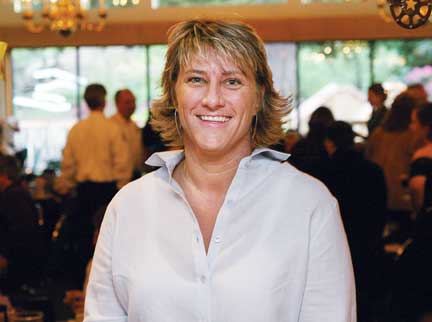
Portland’s “Telecommunicator of the Year”, dispatcher Kate Williams says she “likes helping people”.
Story and photos by David F. Ashton
The term “9-1-1” is often associated with people trained to dispatch rapid emergency response, show poise under pressure, aid with compassion in times of distress, and make critical decisions within seconds.
“Many people do not stop to think about these individuals, until they experience an actual emergency themselves,” says Bureau Of Emergency Communications (BOEC) Public Information Officer Todd DeWeese. “You may never meet them‚ or even know their names‚ but these professionals make the difference between life and death, in many instances.”
This year, BOEC hosted its Sixteenth Annual Employee Awards Banquet on April 11 at Lakeside Gardens.
“Tonight is all about recognizing the significance of the 9-1-1 Call Center,” DeWeese explains, “and recognizing accomplishments during the past year. We took over 1 Million calls in 2006. We’re answering a lot of calls‚ helping a lot of citizens‚ and we’re doing it with fewer personnel.”
Telecommunicator of the Year
Dispatcher Kate Williams is given BOEC’s highest honor; she’s conferred the title, “Telecommunicator of the Year”.
Williams tells us, “I like helping people. We help police officers, firefighters, and medics do their jobs. This award is quite an honor.”
Senior dispatcher Stephanie Solomon-Lopez is one of the co-workers who nominated Williams for the award, “Although she’s been with us for about four years, she’s very good at what she does. She came in with a positive attitude. It’s easy to get personally ‘beaten down’ by some of the calls we get. She stays positive. Our job is to help people, but she goes above and beyond.”
Dispatcher Kim Bronson also nominated Williams. “Kate has become a good dispatcher. But even more, outside the bureau, she is a volunteer with TIPS. By working with TIPS, she goes above and beyond the call of duty. She’s amazing.”
TIPS volunteers, we learn, go to emergency events at which individuals have just experienced a traumatic situation. They help these individuals deal with the immediate impact of the event. Williams used her vacation time to take the training class, and she volunteers at least 12 hours a month on her time off.

BOEC Public Information Officer, and Call Center supervisor, Todd DeWeese was voted “Supervisor of the year”.
Supervisor of the Year
Dispatcher Katherine Stevenson says she nominated Todd DeWeese as “Supervisor of the Year” because “he cares”.
“Todd really listens to us. He tries to see our point of view. He helps us build our skills by giving us valuable input and feedback. And, he helps make my job fun. Even when we’re going through a difficult time, he helps by lifting our mood and keeping our spirits up. That is very important.”
There is often drama, negativity, and unhappiness surrounding their work, Stevenson continues. “No one calls 9-1-1 because they’re having a wonderful day. It is easy to focus on the negativity. Todd helps us stay in balance, and be a ‘whole’ person.”
Asked about his award, DeWeese tells us, “It is always great to be recognized by your peers, those whom you supervise and by your own bosses. It means a lot to me. I’ve won this award before, and that trophy is still proudly displayed in my home.”
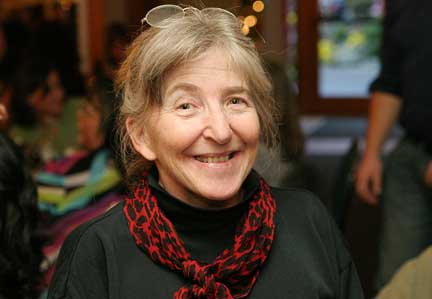
Meet Team Member of the Year, Connie Cohen
Team Member of the Year
The 2006 “Outstanding Team Member of the Year” honors go to Connie Cohen in BOEC’s Information Technology Department.
“No, I don’t take calls. I maintain the computer systems that help dispatchers to their work.”
We asked why the 6-year veteran of BOEC chooses to work with the bureau. “These folks are all my heroes,” Cohen replies. “To do things that help the dispatchers do their jobs well‚ and through them, help our community‚ it is a wonderful thing for me to do. I love my job.”
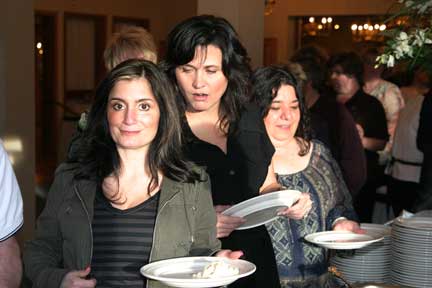
Employees foot the bill for their annual BOEC banquet — not taxpayers. Here you see some of the bureau’s “most famous” workers dishing up a full-course dinner at Lakeside Gardens on SE Foster Rd.
Do you have the “right stuff”?
We’ve reached the 30-year mark; some of our staff members are retiring,” mentioned DeWeese. “We’re always looking for qualified people who are willing to train to be a dispatcher.”
Interested? Call (503) 823-0911‚ classes start four times a year.
© 2007 David F. Ashton ~ East Portland News Service
See volunteers from “Jane’s Park Group” as they take the next step in Midland Park’s development. And‚ learn why this project could help YOUR garden grow‚

Arlene Kimura, Velda Altig and Dorothy Drews work with other volunteers to plant a butterfly-attracting garden at Midland Park, just west of the library’s parking lot of SE 122nd Avenue.
Story and photos by David F. Ashton
When it comes to helping keep outer East Portland “green”, many folks agree that Linda Robinson would qualify for an award, for her volunteerism.
When we caught up with Robinson‚ and seven additional volunteers‚ on March 31, she was working at Midland Park.
“We are planting a Butterfly Garden,” Robinson explained. Burying insects and hoping they’ll grow, we asked?
No indeed: We learned that a “butterfly garden” is one that includes plants which provide both nectar for the adult butterflies, and also plants on which caterpillar-stage butterflies can dine.
The butterfly is more than a pretty insect, Robinson assured us. “Sure, one can see pictures of butterflies in a book, but it’s always better to see them live, and in nature. More importantly, they are pollinators. Pollinators are especially important here, now that our honeybees are having problems with colonies collapsing. And, our native bees are more important for pollinating.”
About Midland Park
It was a grant that funded the purchase of Midland Park’s land. “It was written in the grant that the park be created and maintained as an urban bird and butterfly sanctuary park,” said Robinson. “When we did the master plan for the park about 10 years ago, the butterfly park was planned. We’re fulfilling the plan.”
Looking around the area, one sees rocks and some open area‚ butterflies warm themselves up on the rocks before they fly off, we learn.
This is the garden’s first phase. According to Robinson, planting will continue in the southern area of the park. “We’re planting the more colorful perennial plants right now. Then, we’ll plant some Oregon Grape. We’re doing this over a three-year span. We don’t want to plant more than we can maintain.”

Volunteer project coordinator Linda Robinson helps the garden’s designer, Sharon Perala, of “As Seasons Change Landscape Design”, shows us the plan for the Butterfly Garden.
Meet the designer
Robinson said this kind of garden doesn’t “just happen”. The garden used the services of Sharon Perala, of “As Seasons Change Landscape Design”.
“I like contributing to the community,” said Perala. “I’ve volunteered many hours, as well as being a contractor of the Jane’s Park group.”
Perala says there were many challenges in designing the garden. “We wanted to attract butterflies, and to have as many native plants as possible. But then you have to consider crime aspects‚ we couldn’t place any large dense shrubs which would hide criminal activity. We couldn’t have areas that would become too weedy; the garden needs to be low-maintenance.”
A favorite of butterflies, she says is the Snowberry. “But, the berries are poisonous; with kids coming into the park, we can’t have toxic berries next to the libraries.”
Even with these restrictions on the plant choices, the garden today is looking good. Included in it are Red-flowering Current, Rosemary, dwarf Red-twig Dogwood, Corabells. And, butterflies use grasses as places to hide and feed.
Around the edge of the garden are Douglas Iris and evergreen iris. We’re told rhododendrons will be planted later.
“It is more satisfying to design a park than, say a someone’s back yard. Everyone can come and enjoy it, and it’s for the whole neighborhood,” Perala commented.
You can help
Do you enjoy gardening? Come help out with their next planting. Contact Robinson at lrobins@pacifier.com and she’ll let you know when you can join the volunteers at Midland Park.
© 2007 David F. Ashton ~ East Portland News Service
Don’t miss the first community parade‚ and first Portland Rose Festival parade‚ of the season. See how business people and neighbors are working together to create this brand new event, slated for April 28‚

(Front row) 82nd Ave. of Roses Business Association president Ken Turner works with volunteers: Kathryn Notson, S. Tabor Neighborhood; Paul Ellison, Bank of the West; Johnni Beth Jones; (middle row) Sharon White, PDOT; Sandra McDaniel, Montavilla Neighborhood Association; Alema McCray, president, Montavilla/East Tabor Business Association; are Marie Sworske; (back row) Sgt. Reed Hunt, Portland Police Bureau; Kevin Williams, PDOT, and Greg Bockman, Montavilla Neighborhood volunteer.
Story and photo by David F. Ashton
The first outer East Portland Rose Festival event, and in fact the first community parade of the season‚ as well as being 82nd Avenue of Roses’ first-ever street event‚ will take place on Saturday morning, April 28.
“The first Annual 82nd Avenue of Roses Parade kicks off at 9:00 a.m.,” Ken Turner, the business association’s president tells us.
“This event is a collaborative effort,” Turner continues, “involving several neighborhood associations, business associations, and many other organizations. Participants include bands, marching groups, Chinese Lions, the Keystone Kops, Royal Rosarians, Rose Court Princesses, Portland Corvette Club, clowns, and more.”
The Avenue of Roses Parade starts at Eastport Plaza, 4000 SE 82nd Avenue. The parade will travel north along 82nd Ave.; then west onto SE Yamhill, disbanding at SE 78th Avenue. Presenting sponsors for the event are Eastport Plaza Shopping Center and Washman, USA.
Festivities continue after the parade, with a sidewalk festival hosted by the Montavilla East Tabor Business Assn. and Montavilla Neighborhood Assn.
To participate in the parade, or for more information, contact Ken Turner at (503) 771-3817.
© 2007 David F. Ashton ~ East Portland News Service
Not only does he create the finest pies, cakes and pastries, read this story about a baker who teaches his craft to at-risk young people‚

“Jack the Baker” creates delicious delights in small quantities, using the highest quality ingredients.
Story and photos by David F. Ashton
Folks in southeast Portland don’t have to travel far to find a good — no, great — “made-from-scratch” bakery.
After enjoying his breads and pastries for years, we decided to meet the man “in the dough” who runs His Bakery on SE 72nd Ave., just south of Woodstock.
“The best part about being a baker,” says Richard “Jack” Robeson III with a open smile, “is being able to eat the leftovers. Actually, I take pleasure in making things people enjoy. I really like seeing the smile on their faces when they eat something that I’ve baked.”

The small storefront belies the modern preparation facility‚ and commercial oven‚ hidden away, deep in the store.
Jack and his family keep busy. We talk as he pulls out trays of his “Original Good & Ugly” cookie. It’s made of roasted seeds, flax, sunflower, pumpkin and sesame, with no refined sugar. Some varieties also have chocolate chips or cranberries and apricots baked in them.
Recipe for troubled youth
Jack, a father of three, says he’s been in business for 12 years. He learned the baking trade at Clark College, and worked at Elephant’s Delicatessen and Broadway Bakery.
“We started the business to provide products of value,” Jack tells us as he mixes a batch of dough.
“But more importantly,” he says sincerely, “during the summer, we bring in junior high school kids‚ some of whom who are having trouble in school or at home. They spend the summer with us, and I each them the trade.”
He pauses while he washes batter off his hands, then adds, “I’m a baker to earn my living, but helping young people is a mission. I get to share my love of baking.”
Pies of renown
Long-time customers might say Jack is most famous for his “home made” pies. “There aren’t a lot of bakeries in Portland that make a good, ‘home made’ pie like we do,” Jack beams. “Our cakes are becoming very popular, as are our cinnamon rolls, Marionberry muffins, and oat bran cookies.”
Jack apologizes for not at that moment having his best-in-Portland, custard-filled chocolate-topped eclairs in stock. “I know they’re your favorite,” he says.

When you see this building‚ you’re at His Bakery!
His Bakery, 6011 SE 72nd Ave., is open from 7 a.m. to 6 p.m. Tues through Friday, from 8 a.m. until 1 p.m. on Saturdays. They’re closed Sunday and Monday.
© 2007 David F. Ashton ~ East Portland News Service
 click here to subscribe


