Find out what safeguards Rose City Detox uses to protect nearby schools, and the Lents neighborhood …
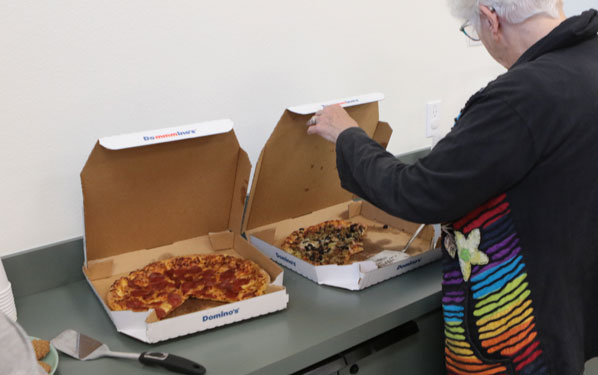
Ahead of the formal start of this LNLA meeting, a neighbor takes a slice of pizza before the program begins.
Story and photos by David F. Ashton
The 85-degree temperatures, with skies getting hazy as smoke started moving into outer East Portland, didn’t discourage neighbors from turning out on July 9th for the Lents Neighborhood Livability Association (LNLA) meeting at the Community Connection Center.
As is their custom, LNLA volunteers laid out a light supper before the meeting – pizza for supper, and cakes from Jenni’s Sacred Grounds – giving those who arrived early a chance to chat at tables before the evening’s program began.
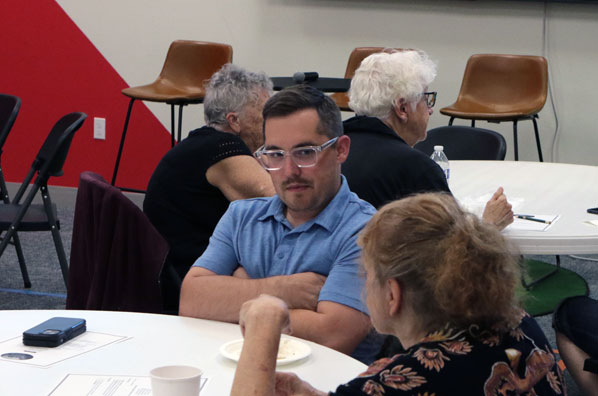
During the social time before the meeting begins, Rose City Detox Executive Director Billy Anderson chats with neighbors.
After routine announcements, LNLA Board Member David Potts introduced the featured speaker – Rose City Detox Executive Director Billy Anderson – who came to explain how his new program operates, just a few blocks away; and what it means for the neighborhood.
From a tent on 92nd Avenue to running a local detox
Anderson began by locating Rose City Detox “off SE 127th Avenue and Holgate Boulevard,” making it clear that the facility sits in the same community he grew up in – playing Little League baseball in Lents, and at Mt. Hood field in Brentwood-Darlington – and later using drugs.
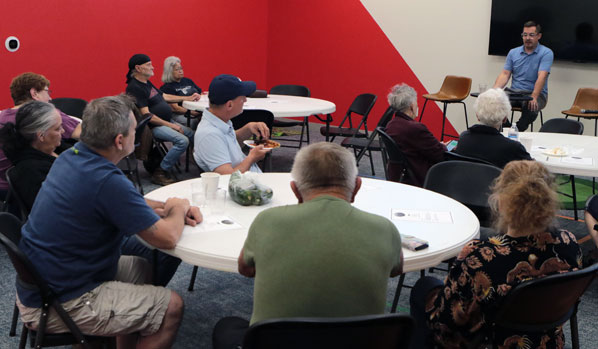
Anderson recounts his lived experience with addiction and homelessness.
He told the group he has “lived experience” with addiction and homelessness, including a period when he camped in a tent off SE 92nd Avenue and Powell Boulevard. He has been in long–term recovery since January 5, 2012, after multiple trips through detox and treatment programs which, he recounted, often discharged him with “a little bag of medications, and a list of places to call,” but without any real case management or a clear next step.
That “revolving door” experience motivated him to open Rose City Detox. Anderson told LNLA attendees he and three partners refinanced their homes to launch the privately-funded facility, choosing not to take grants, or county dollars, so they could run the program the way they believe it should operate – while still accepting the Oregon Health Plan and private insurance.
“We’re not in it for money… I want to make something different,” Anderson told the group, describing his commitment as being to do more than “find a good building” and fill beds.
Filling the dangerous gap between detox and the street
One of Anderson’s main themes was the danger people face when they leave detox without a firm plan. He pointed out that relapse ocuring immediately after detox significantly increases the risk of overdose and death, especially with today’s street drugs.
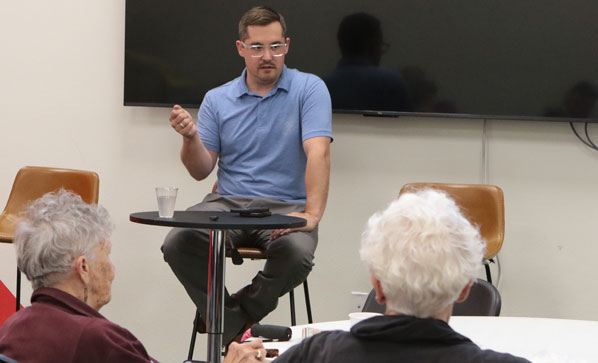
Telling how Rose City Detox is different from hospitals, Anderson focuses on longer stays, higher staffing, and firm follow-up plans.
Unlike hospital-based detox stays that might last 12–48 hours, Rose City Detox typically keeps patients five to seven days – long enough, Anderson explained, to get them through the worst three days of withdrawal, start stabilizing their health, and begin planning their “next step”, whether that is:
- Residential treatment
- Intensive outpatient services with sober housing
- Sober living alone, backed by structured support
Anderson told the audience that, in its first two months of operation, the facility had only a handful of cases where staff could not line up follow-on services. In those instances, he reported, he personally transported people back to their apartments or original communities outside the immediate neighborhood, rather than releasing them onto to the street nearby.
“I don’t drop problems in this neighborhood,” he emphasized, adding that a core promise of the program is that no one should leave a detox center with only a bag of medications and a list of phone numbers.
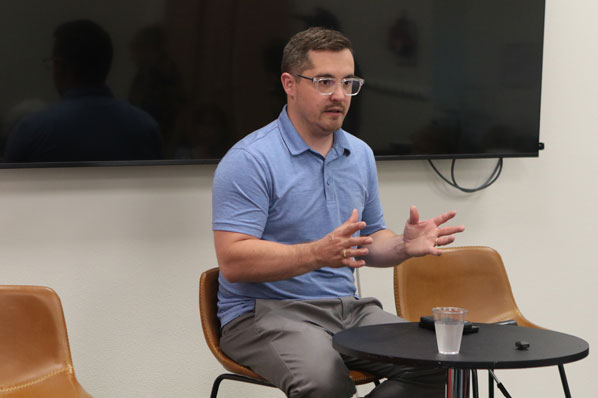
Anderson takes questions from Lents neighbors about admissions, safety, and what happens after detox.
Questions this presentation confronted head-on:
- Why did opening a detox center next to an elementary school spark TV and radio attention even before it took its first patient?
- What safeguards does Rose City Detox use to prevent “open-air drug markets” from forming outside its doors?
- How does an appointment-only system change who shows up – and who stays away?
- Why does he compare the first 24 hours of fentanyl withdrawal to an “exorcism”?
- What does a “whole health experience” look like in detox, and how is it different from just stabilizing people and sending them back out the door?
- How does this program try to keep patients – and the surrounding neighborhood – safer at the same time?
- What does Anderson believe it really takes for people to move from short-term detox into long-term change?
The LNLA recorded Anderson’s presentation and the extended question-and-answer session with neighbors.
Watch the full talk and hear every question in the LNLA-produced video of the July meeting:
Upcoming LNLA meeting on August 13
The LNLA continues to hold its live, in-person meetings at the Community Connection Center, typically from 6:30 until 8:30 p.m. A light dinner is served from 6:30 to 7:00 p.m., before the evening’s program begins.
Hear from and meet Aundrea Hood, Operations Director for 4D Recovery and Sharon Meieran who is running for Multnomah County Chair. This meeting of interest will be in the Community Connection Center located on the grounds of New Hope Church at 10603 SE Henderson Street. [Enter through the church’s front doors, turn right, go down the first hallway. Signs will point the way.] For more information, email lnla2018@gmail.com.
© 2026 David F. Ashton ~ East Portland News™